Bowing in Martial Arts
Updated: Jul 18
Why do we bow?
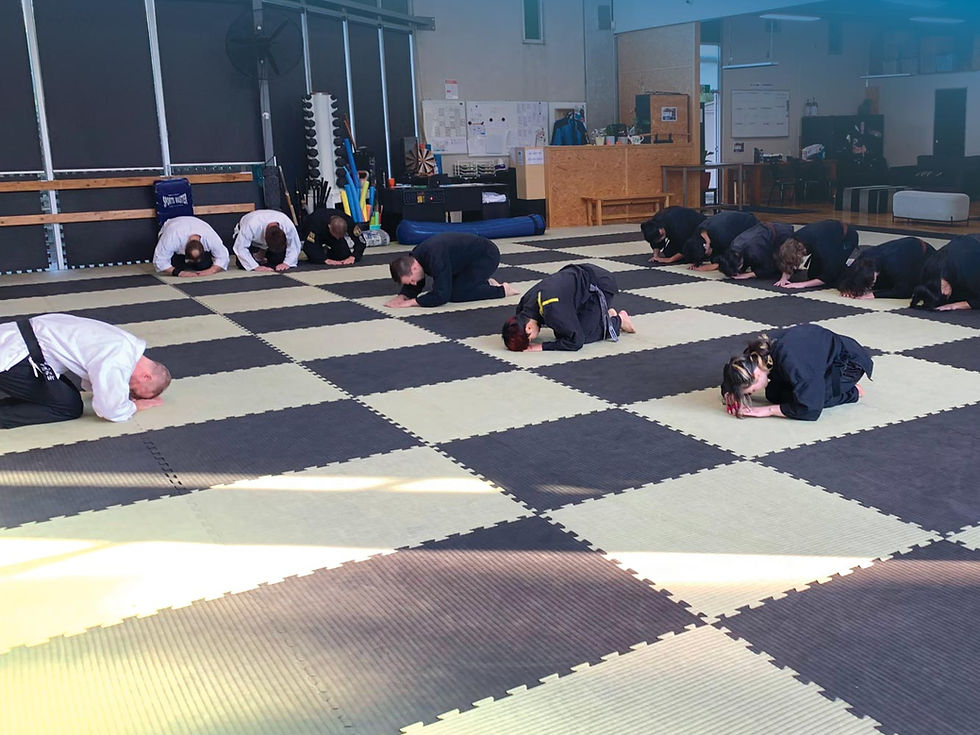
Bowing in martial arts shows respect for the art, the dojo, the instructors, other students and yourself. The bow is not a religious formality.
When to bow?
At Martial Journey, we bow as we're entering or leaving the dojo: to show gratitude for the space where we learn.
We bow, as we step on or off the mat: to show readiness to train, leaving other worries aside until training concludes.
We also bow to our training partners: to show mutual respect and trust.
How to bow
Standing bow (Rei): Stand with feet together (Heisoku dachi), arms at the side and bow slightly from the waist.
Sitting position (Seiza): (Seiza) is the formal sitting position where the student sits on his or her heels with big toes crossed or touching. Traditionally knees should be one fist apart with palms resting on the top of the thighs and elbows relaxed. Backs should be straight and the head held upright.
Formal bow (Ritsurei): From standing to (Seiza), kneel first bending at the knees, keeping your toes on the ground and your back straight. Flatten your toes so as to have the tops flat on the ground, left toes slighting over the right. In (Seiza), place the right hand flat on the mat to express trust and respect for Self. The left hand follows, forming a triangle with the thumbs and forefingers. The top of the triangle representing Self, the two base points of the triangle representing Others. Bow with good posture, placing your forehead gently on the triangle. At completion of bow, return the left hand to the thigh first, then the right. Stand by rising onto the toes, then keeping your back straight stand up so that the feet are together.